Pitso Dladla: 'There is no easy game in the Nedbank Cup'
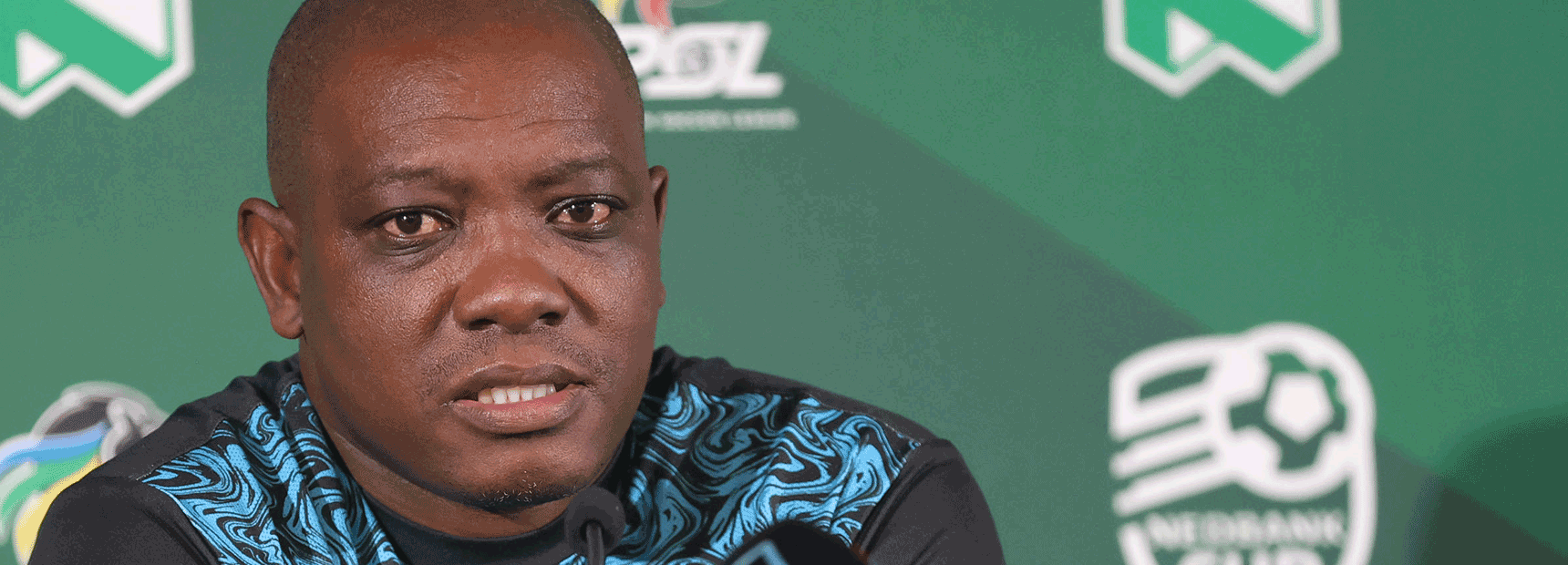
PIC: Durban City coach Pitso Dladla
Durban City are into their first Nedbank Cup semi-final where they will face second-tier Casric Stars for a place in the May 2 final.
City have needed penalties to advance in all three of their ties in the 2026 competition, the latest a victory over Lamontville Golden Arrows in the quarter-finals this past weekend.
Their coach Pitso Dladla admits they have ridden their luck, but is hoping to make history with the team this campaign.
Coach, congratulations on making the semi-finals. Your thoughts on the game against Lamontville Golden Arrows?
Pitso Dladla: It was a very tough game. Golden Arrows are one of the teams that can really play and move the ball around, and they have highly technical, gifted players. We knew we were going to suffer without the ball.
I thought the plan worked very well in the first 20 minutes because we wanted to make sure that we did not concede. We set pressing traps, tried not to give them too much space, and relied on counter-attacks until we managed to get a good goal.
After that, the most important thing for us was to absorb pressure and get to half-time in a good position. When we came back, I think it became more mental, because the players started dropping deep and we invited Arrows onto us. We could not deal with the cross and should have closed it down better, but their player was left free in the box.
After that, we had to absorb pressure again because we could not really get out, especially once we got the red card. From there, to be honest, we relied even more on counter-attacks, but Arrows really put us under tremendous pressure. They missed a big chance and I honestly thought that one was in, but it hit the post and went out.
At that point, we felt that if we could take the game into extra time, we might still get something. In football, sometimes you only need one chance and you end up winning the game. We suffered without the ball, relied on counters, got one, capitalised on it, and then took it to penalties.
I think penalties were more about mental confidence. Even though we were one man down, our confidence was higher than the opposition’s, and we won on penalties.
In the previous two rounds, you also went the distance and won on penalties. What does that say about the character of this team?
This team is built on very strong character. In fact, in the last round and even the first round, all our games in the Nedbank Cup have been decided on penalties. We do not want that to happen, and before the game I said this one should finish in 90 minutes, because penalties are stressful even if we have been lucky in them.
But yes, it says a lot about the character of the team. The players fight, they graft, and they work for each other. I think that is what any coach would want before talent even comes into it.
We also have experienced players in the group. When they come on, they calm the team and help us manage difficult moments. That was very important for us tonight.
Does this also speak to the balance in your squad, especially between experienced players and those who have come from the lower divisions?
Yes, I think we have struck the right balance between experienced players and those coming from the lower divisions.
At the end of the day, you want players to show leadership when things are tough. They need to take responsibility on the field and control difficult moments, and I think that happened very well.
Looking at the last four in the Nedbank Cup, how do you assess your chances? Some people may think there are easier games now, but the remaining teams also look like hard-working, organised sides.
If you look at the nature of the Nedbank Cup this season, there is no one who can say there is an easy game. That has already been proven with all the upsets.
Maybe the good thing about the teams that are left is that you have a better idea of each one. Casric, you get to know them now; Milford are our neighbours, so we know them; and TS Galaxy are in the same league as us. So it becomes a little easier in terms of preparation because you know what to expect.
You were part of the technical staff that achieved promotion last season. Are you surprised to be sitting fourth in the league and now in the Nedbank Cup semi-finals? Or did you believe this was possible?
I think the danger is putting it into our heads that we are sitting fourth with so many games still to go. That would be dangerous because in this league you can lose form and quickly go down the table.
But to answer your question, we are not surprised by the way we prepare and plan for each game. We concentrate on one game at a time. If that game gives us a positive result, then obviously we improve our chances of climbing the table.
We also have an advantage at home because we have not lost there for a long time in league matches. That helps us. But in terms of saying we are going to finish fourth, I do not think we should be looking at it like that, because we do not know where we will end up when the 30th game of the season is played.
When it went to penalties, how confident were you that your side would get over the line?
It is easy to talk about confidence afterwards, but to be honest, I was just calling on all the divine powers and the football gods.
If Golden Arrows could miss the kinds of chances they missed during the 90 minutes, I was asking myself how we could come so far and then still lose on penalties. In football, it is rare for a team to miss such big chances and still not win the game. So I was really just praying and saying, “God, you have brought us this far, just give us this game.”
Coaching can be unstable in this country, and many teams struggle when there are changes in the technical team. What has been the secret behind Durban City’s progress despite those changes?
In terms of the changes, I would not say much about that. But I think what this club has done right is the work behind the scenes.
The structures are what enable what you see on matchday. If you look at the management, the different departments, the conditioning staff, the performance department, the medical team, and the composition of the squad, all of that plays a role.
As we have said, there is a good mixture of experienced players and players coming from the lower divisions. All of that comes into play. It is not just about the technical team. It is more about the structure that has been created by the chairman and the board of directors. I think that is what is helping us.